
Beginning Fujifilm
- Peter Worrall

- Dec 19, 2023
- 6 min read
A beast in the field, but requires a beast to carry it
By late 2022 I had been shooting with the Nikon D850 for little over a year. When starting photography back in 2007 with the D70s, shooting with such a large camera was intimidating at first, but one becomes accustomed to a particular workflow in order to get the shot you want. In the case of the D70s it was very simple to photograph portraits and non-moving subjects. This became somewhat easier as sensors became better quality and offered better sensitivity without so much noise at high ISO, and the D7200 was a great example of that. One of the main reasons I spent more money on the D7200 was that the workflow with a screen on top of the camera's body would be more suited to professional-type photography. This allows fast reaction and better control over what you're shooting. Coupled with good noise control and good controls and ergonomics this was a very powerful camera in a reasonably-sized package.
The D850 takes all of these considerations and turns them all up to 11. I remember taking the first few shots on the D850 out in the field and the difference between this and the D7200 was astounding. I noticed that the D850 didn't take better images, but it allowed me to achieve the image I intended both faster and more accurately. At the time this was a revelation, and I revelled in the chance to capture the world in 45MP glory. For a time the D850 went everywhere with me; from birthdays to meals out in the village - this become the only camera I felt I needed for any circumstance. Leap is a good example of an image where the D850 became an extension of my arm; I wanted photographs of a blue tit, and wham! An image of a blue tit jumping of a branch, no sweat. I can't imagine capturing this image with any other equipment, the combination of the D850 and the Nikon 500mm f/5.6 PF is a powerful one.

Landscape work is my personal favourite photography genre; generally I make a point of taking 2-3 fairly arduous trips per year to the Lake District and Peak District to capture some interesting landscape images. I noticed on these trips during 2022 that the D850 was sublime at taking these photos, but it was too large and heavy to have swinging around my neck all day and that my whole pack weight had gone up as a result of taking the beast.
This wasn't the case merely for walking, but the constant urge to bring it along to seemingly ordinary non-photography days out was taking its toll. I had gone from being the man who wanted to showcase the world in 45MP to being the man whose shoulders were aching from holding a heavy object but had no upper body strength to support it.
Starting different photography with Fujifilm
Enter Fujifilm. As mirrorless technology has become better over the years and the inevitable switch from DSLR to mirrorless grows nearer, Fujifilm has long been a brand which has captured my attention. Sony has seemingly been attempting to steal business from Canon and Nikon for years very much directly, whilst Fujifilm currently have no full-frame alternative to Canon and Nikon. Fujifilm confine themselves to the somewhat competitive APS-C and the less competitive but potentially more lucrative medium-format market.
For me this strategy has been intriguing for a while. Back when I was accruing full-frame lenses but shooting with the D7200, I remember a video on YouTube describing that shooting full-frame lenses doesn't really make that much sense; this advice was always troubling for me to process whilst spending extra money on full-frame glass. The argument was that a full-frame lens is designed to be sharp generally across a wider field of view due to the larger sensor it is required to illuminate; this means that in general the effective resolution required to maintain sharpness is somewhat lower compared to an APS-C lens which includes a crop factor. So therefore when using a full-frame lens on a crop sensor camera, unless the full-frame camera has a very high pixel density (ahem..D850), the crop sensor will only be magnifying any lack of sharpness in the lens.
When buying my first full-frame lenses I viewed the extra weight as a badge of honour, now when I carry them round I wish I'd taken a golf trolley with me.
Of course, shooting the D850 is a test of anyone's ability to take sharp images but this advice stuck with me. I found that in general some lenses just seemed to take sharper images with the D850, even with its punishingly high pixel count. However, this advice transcended into the physical world - what's the point in illuminating parts of a sensor which isn't even there? When buying my first full-frame lenses I viewed the extra weight as a badge of honour, now when I carry them round I wish I'd taken a golf trolley with me.
It makes no sense to take additional weight to illuminate parts of a sensor which isn't there and may not result in sharper images. Sure, pro-spec lenses tend to have additional features to protect against chromatic aberration and are generally faster, but the difference between full-frame and APS-C lenses is a large gulf for brands which manufacture both: Canon and Nikon spring to mind. Additionally, I've often found myself lugging the D850 around in circumstances which don't demand high pixel count or super-sharp rendering. Sometimes, you just don't need it. A good example of this is the following image (as yet untitled and not included in any portfolio yet), taken using the D850. I really like this image, and love the creamy texture in the clouds which offer a slight glow over the subject. I shot this in black and white on the day, which goes some way to explaining why the composition of the image makes it seem older than it really is.
However neither the D850's quick autofocus nor its pixel count or its colour rendering where important to what makes this image appealing to me. If anything, maybe the D850's excellent dynamic range makes this look a little more like film than normal, but this could have easily been taken on a phone.
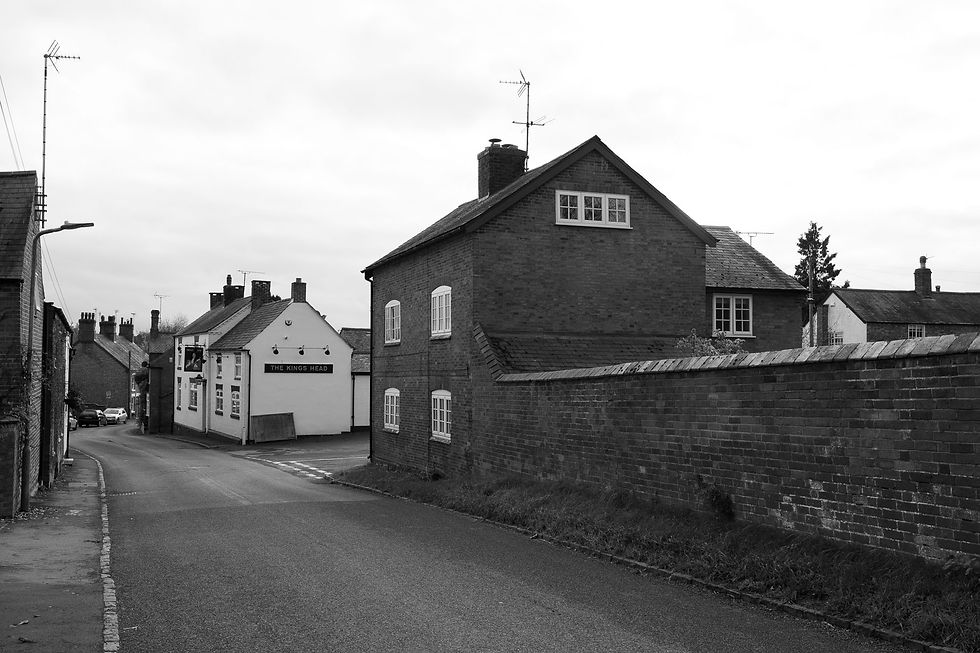
In terms of sharpness and outright image quality, there are times when these are absolutely necessary for the shot to work. But more often than not I think a camera with a reasonable set of specs and a lens which is at least remotely sharp will take 80% of the non-specialist images I want to take.
Fujifilm spend a significant portion of their days manufacturing lenses for APS-C cameras, many of which are of professional standard, and in many cases are every bit as sharp as the best Canon or Nikon lenses despite being half the weight - this makes such a compelling case for a system which simply gets you out doing this hobby we all love.
Colour is Everywhere
In many circles Fujifilm are best known for their colour representation, which is especially true when using their many popular film simulation modes. Film simulation recipes are abound on blogs and forums all over the internet, many of which are truly spectacular, allowing photographers to capture film-like images straight to JPEG right on the camera.
In fact, this is now exactly how I shoot the Fujifilm. Leaving the camera in a film simulation mode I shoot all day only in JPEG, enjoying the rich colours and textures offered. This has led me to realise that often the colour of the image is more important than the composition itself. For too long with DSLRs I've tried to capture real-world colours and textures, and I've now reached the epiphany that this is madness and that there is so much personal style and feeling one can impart onto an image using colour, or lack of it.
Much of the film simulation offered by Fujifilm recipes can be recreated in Lightroom, often pulling out colours further if using raw files. However, the level of work is so much higher, and means that your eye can't be informed whilst taking the shot.
Examples here are 'Rosemoor I' and 'Goal' from my Instagram Portfolio. 'Rosemoor I' features a film simulation added manually in Lightroom, and 'Goal' features a Kodak Portra 400 simulation recipe I used in the X-T30 (found here: https://fujixweekly.com/2021/08/17/fujifilm-x-t3-x-t30-film-simulation-recipe-kodak-portra-400-v2/)


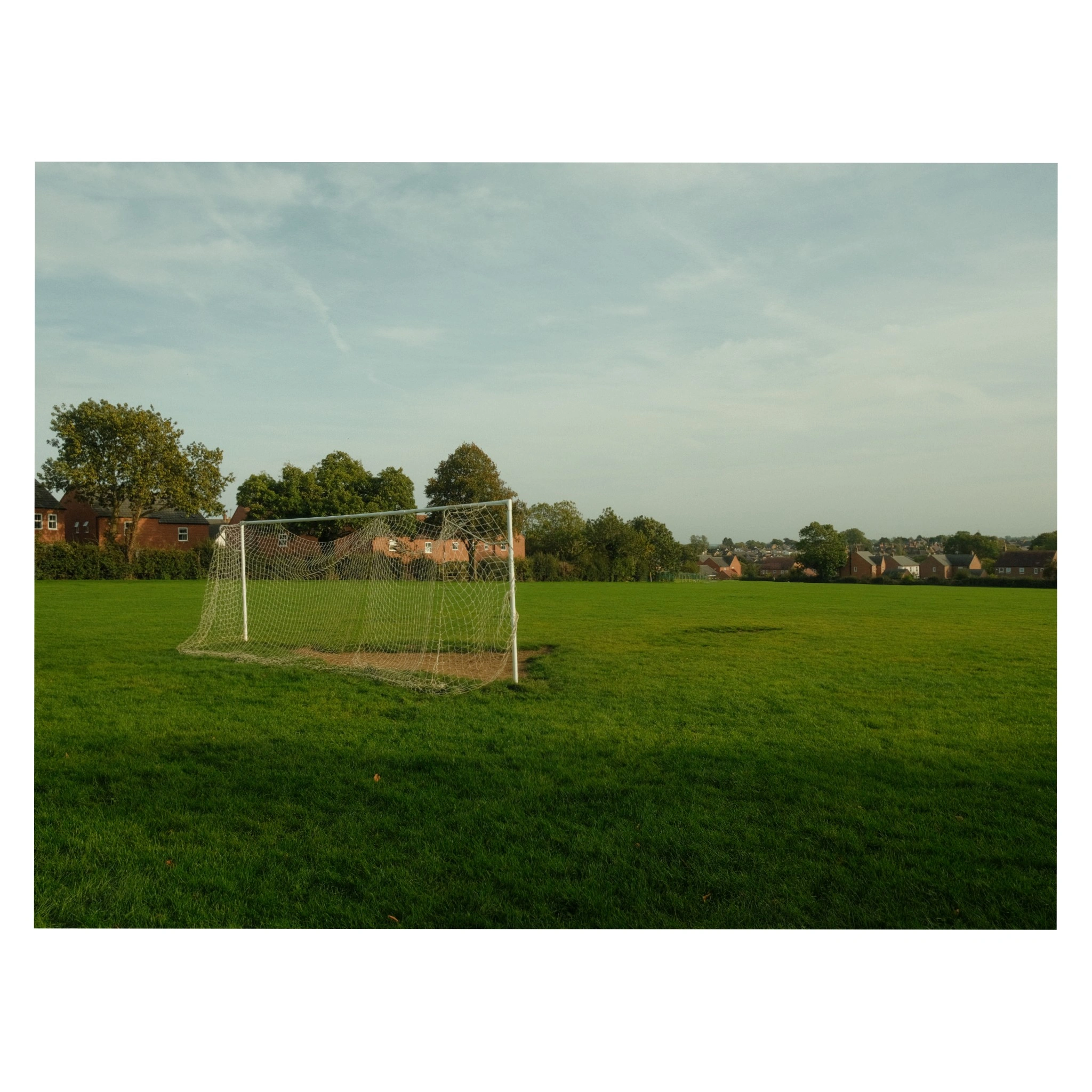
'Rosemoor I' is a film style image I'm happy with, with a solid magenta tint across the frame, but I somehow find the colours of 'Goal' more appealing in a way I'm not even sure how to describe. It required no adjustment, this is how it arrived straight out of the camera.
Overall, shooting with smaller and lighter cameras has strong merits in 2023, with image quality being about far more than just resolution or accurate reproduction. It proves that there's no substitute for lighting, composition, colour, and above all, inspiration.

Comments